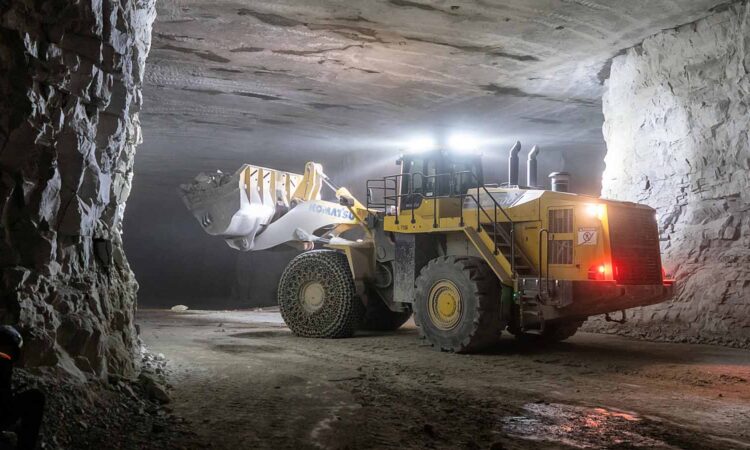
Scotty’s Contracting & Stone integrates intelligent compaction with 3D digital blueprints so your project meets density targets, minimizes variability, and documents compliance for DOT and commercial owners.
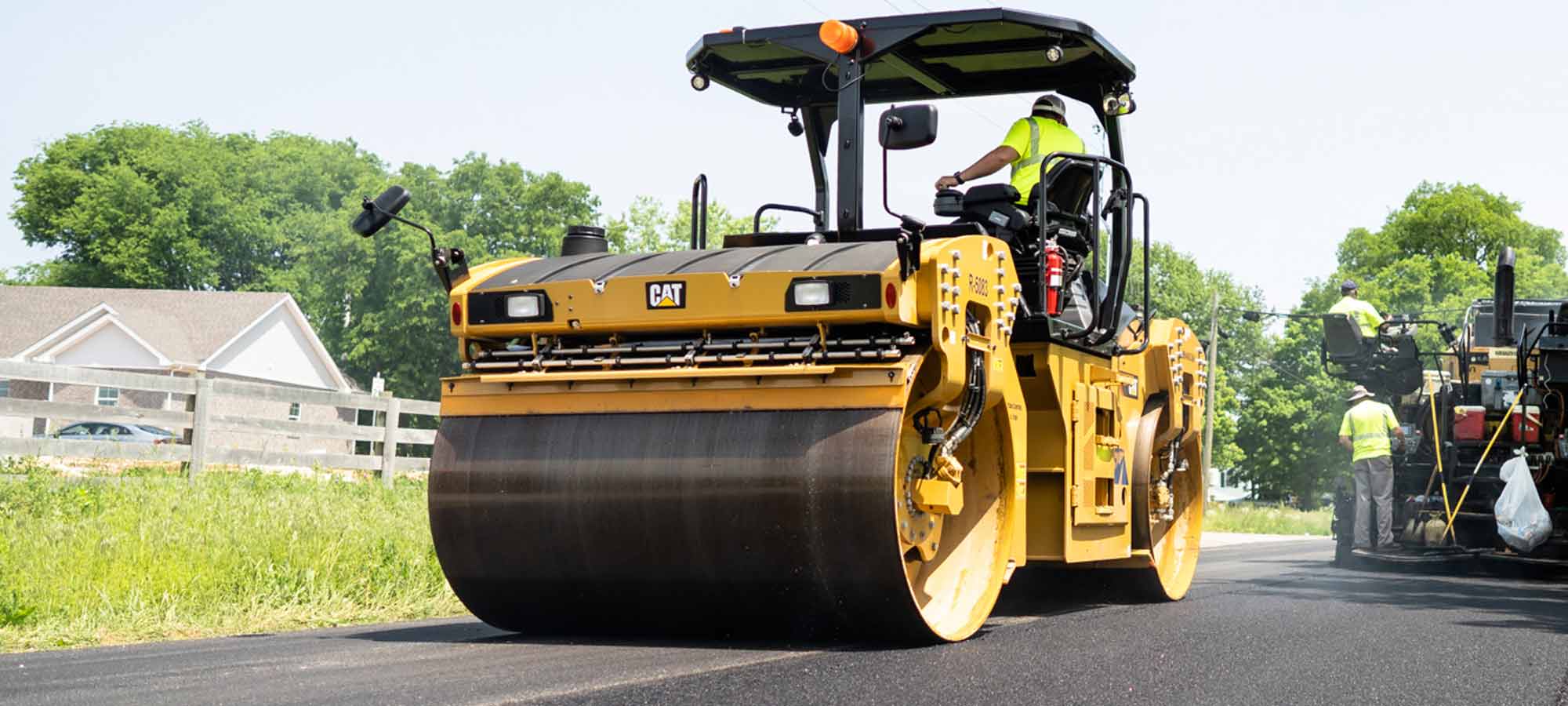
Intelligent compaction (IC) measurement is the live feedback system built into modern rollers that helps operators achieve the right density consistently. Rollers equipped with GPS and onboard accelerometers measure responses like stiffness or compaction meter value on each pass. The system logs pass count, vibration settings, amplitude, frequency, mat temperature, and roller speed against precise locations. You and your QC team see a color coded map of coverage and relative stiffness as the work happens, not after the mat cools.
IC does not replace acceptance testing. It supplements cores and nuclear gauge readings by guiding operators to compact at the right time and place. On long pulls and complex tie ins, it reduces over rolling, avoids cold spots, and standardizes patterns between shifts. The outcome is uniform density and a complete digital record of how it was achieved.
A closed quality loop starts with a 3D model that defines alignment, profile, cross slope, and lift thickness. At Scotty’s, that model is validated for site control and then shared across the fleet. Here is how the workflow connects:
Because the same geometry and timestamps follow each step, you get a single source of truth for QC and QA. If a question arises later, you can point to modeled thickness, paver speed, roller patterns, and field test results, all tied together.
Asphalt performance depends on voids in mineral aggregate, binder content, and achieved density. Most DOT specifications target roughly 92 to 96 percent of maximum theoretical specific gravity, often abbreviated as percent of Gmm. Hitting around 95 percent balances durability and flexibility.
Intelligent compaction helps operators reach the sweet spot across the entire lane. Uniform density moderates thermal cracking and improves fatigue life, which is why owners insist on the 95 percent neighborhood. You are not just passing a test. You are protecting the pavement’s lifecycle cost.
Field teams often verify density using a pattern test that checks multiple locations across the lane. A common approach is to take measurements near the left wheel path, center, right wheel path, and at two intermediate points. Spreading readings across the mat shows whether the roller pattern is delivering uniform results. If the edges are low or the center is high, crews adjust the sequence, amplitude, or speed and confirm with a follow up set.
Whether your project uses cores or a nuclear gauge for acceptance, pairing those spot checks with the roller’s IC maps gives you both the ground truth and the full coverage view. The combination reduces retests and cuts the risk of a late discovery after the mat has cooled.
On Kentucky projects, Scotty’s crews plan for compaction windows based on season, lift thickness, and haul distance. Warm mix can extend workable time, and thicker lifts retain heat longer, but base preparation and drainage still govern. In practice, we aim for the 92 to 96 percent of Gmm range and use intelligent compaction to tighten variability. Field acceptance then confirms the final numbers with cores or gauges.
Pre paving
During paving
Post paving
Every corridor is different, but you can build a sound estimate by breaking costs into units. Consider milling and cleanup, base repairs, tonnage by lift and mix type, trucking distance, traffic control, and testing. Seasonal timing and night work can influence production rates and MOT plans. Intelligent compaction and 3D control often reduce rework and improve yield, which can offset part of your upfront technology investment through fewer overruns and quicker acceptance. For mill and overlay scenarios in South Central Kentucky, explore our mill and overlay services in Bowling Green to discuss scopes, windows, and production rates that fit your schedule.
Roadway engineers convert performance goals into buildable plans. They validate survey control, design the pavement structure and drainage, and create the 3D model that guides pavers and rollers. They coordinate plant mix designs, hauling sequences, and traffic control so compaction windows stay open. During construction, they review IC maps, field test results, and thermal data to confirm that the project is tracking toward
specification and to adjust when conditions change.
Vertical integration closes the loop. Our quarries supply uniform aggregates. Our plants produce warm mix or RAP options to spec. Our GPS tracked trucks feed the paver at the right tempo. Our rollers, guided by intelligent compaction, lock in density. The same data stream, from the model to the roller seat, documents the work for DOT acceptance and gives commercial owners peace of mind. If you want to see how 3D machine control improves grading and paving handoffs, review our 3d machine control services bowling green resource for details and outcomes.
Intelligent compaction and 3D digital blueprints turn paving into a repeatable, documented process. You plan the lift by the model, feed the paver on schedule, and compact to target density with live guidance. The result is lower variability, longer pavement life, and a clear QC and QA trail for acceptance. As Kentucky’s vertically integrated partner, Scotty’s Contracting & Stone aligns engineering, materials, hauling, and compaction to guarantee quality at every stage. When you are ready to plan a corridor, coordinate a mill and fill, or verify density targets on a live project, connect with our roadway engineering service bowling green team to schedule a project review and lock in the right window for success.