Features
October 20, 2025

What Is 3D Machine Control? A Contractor’s Guide For Faster, Safer Roadway Builds

3D machine control uses satellites, site base stations, and a digital 3D model of your project to guide equipment automatically.
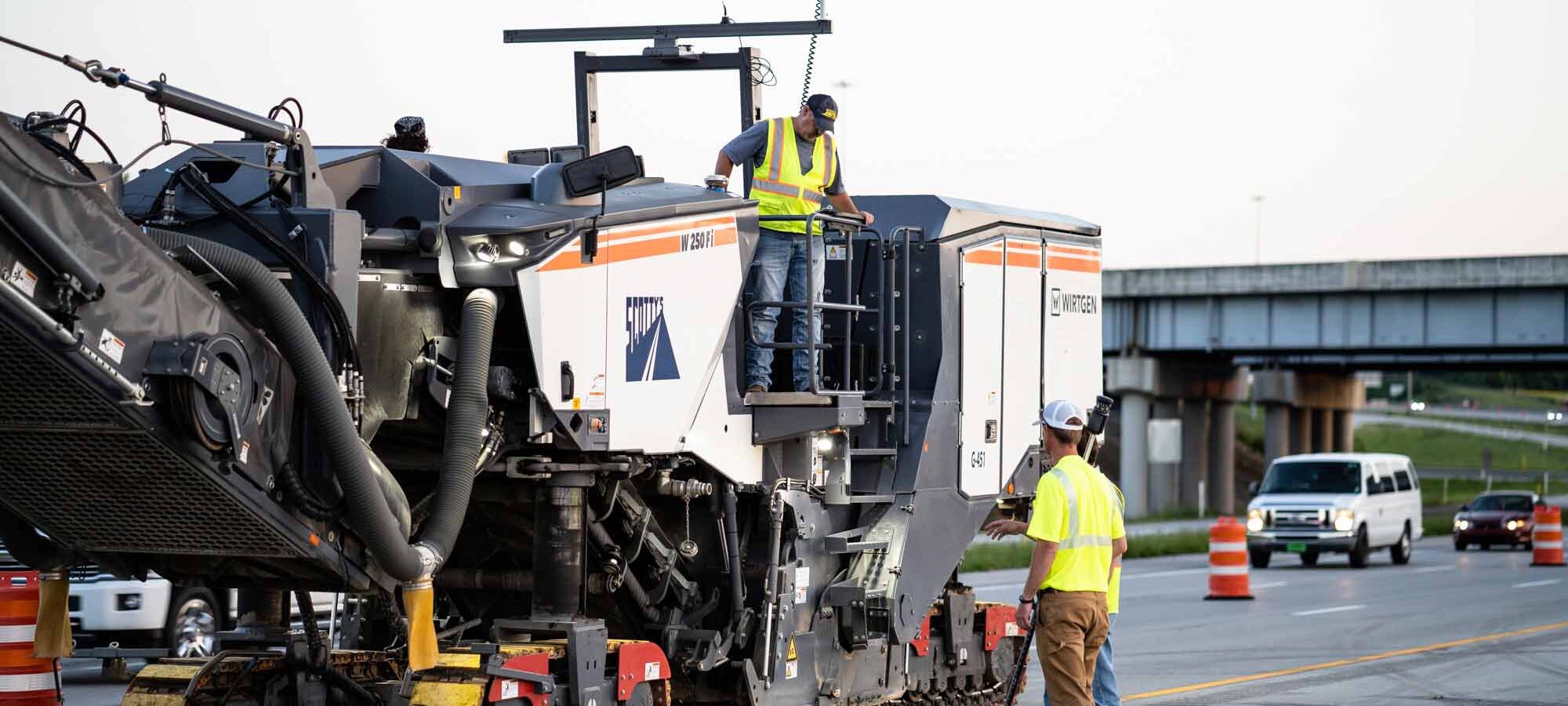
3d machine control

If you build, maintain, or own roads in Kentucky, you have likely heard about 3D machine control. It shows up in bid specs, on pavers and graders, and in conversations about closing lanes faster. This guide explains what it is in plain language, how it works, and when it delivers a measurable return. You will also see how Scotty’s Contracting & Stone puts 3D control to work across design and field execution to shorten schedules, reduce rework, and improve safety on roads, interstates, and commercial sites.

What is 3D machine control, in simple terms?

3D machine control uses satellites, site base stations, and a digital 3D model of your project to guide equipment automatically. A grader, dozer, or paver reads its exact position in real time and adjusts the blade or screed height to match the engineered design. Instead of staking every 25 feet and checking with string lines, the machine constantly compares where it is to where it should be, then makes micro adjustments. The result is a finished grade and mat that meet spec the first time, with fewer passes.

What does a 3D machine do on your site?

  • On earthwork: The dozer or motor grader automatically trims to subgrade, cross slope, and crown. It keeps your cut and fill balanced and reduces over excavation.
  • On paving: The paver controls thickness and slope off the model. The roller team pairs compaction targets with uniform mat thickness, which supports density and ride quality.
  • On complex tie-ins: At intersections or bridge approaches, 3D guidance blends elevations across lanes and shoulders so you hit smooth profiles without guesswork.

In practice, a 3D machine places material only where it is needed. That improves yield on aggregate and asphalt, reduces wasted trucking, and saves labor on rework.

How the technology works: GPS, base stations, and digital models

  • GPS/GNSS positioning: Antennas on the machine receive satellite signals.
  • Site control: A local base station broadcasts corrections to achieve survey-grade accuracy. Total stations can be used in tight or obstructed areas.
  • The digital model: Your roadway design is converted into a 3D surface file with grades, cross slopes, and alignments.
  • On-machine controls: Sensors and controllers move the blade or screed to match the model while the operator supervises.

Scotty’s engineering team builds the 3D digital blueprints, validates control points, and uploads them to our GPS-enabled fleet. Because our crews, materials, and hauling are integrated, we can sequence work so trucks, plants, and machines operate in sync.

2D vs. 3D machine control

  • 2D control: References a single plane or string line. It can hold a constant elevation or slope, but it does not know where the machine is on the project. Good for simple pads or straight pulls.
  • 3D control: References a full 3D surface and alignment. The machine knows its position anywhere on the site, follows variable crown and super elevation, and transitions through tapers and tie-ins without manual offsets.

If your job has changing cross slopes, ramps, super-elevations, or frequent elevation breaks, 3D control prevents the small errors that add up to rework.

What does a roadway engineer do in a 3D workflow?

A roadway engineer turns intent into constructible detail. They analyze traffic, soils, and drainage, then design alignments, profiles, and pavement structure. In a 3D workflow, they convert those designs into a coordinated model, set control, and plan phasing so construction can proceed safely with minimal traffic disruption. They also evaluate materials and layer thickness to achieve performance targets. At Scotty’s, engineering stays connected to field crews and plants, which allows quick design-change response when conditions vary.

Civil vs. heavy civil, and where 3D control fits

  • Civil construction: Site development, utilities, grading, and paving for commercial projects and local streets.
  • Heavy civil: Larger transportation and infrastructure work, such as highways, interstates, bridges, and major earthworks.

3D machine control benefits both. On a commercial site, it tightens building pad tolerances and reduces undercut. On a highway or interstate, it drives smooth profiles, accurate super elevation, and uniform mat thickness across long pulls.

The real benefits: yield, speed, safety, and quality

  • Higher yield: Accurate grade and thickness means less wasted aggregate and asphalt.
  • Shorter schedules: Fewer stakes, less checking, and fewer rework passes save days on phasing.
  • Safer work zones: Crews spend less time in live traffic, and night operations shorten lane closures.
  • Better ride and drainage: Smooth profiles and correct cross slopes extend pavement life and reduce callbacks.

Across Kentucky, we have applied 3D control on interstate mill and fill, new roadway construction, and commercial site development. The common outcome is fewer change orders tied to survey and staking, and a faster return to normal traffic.

When 3D machine control delivers ROI: a quick checklist

Use this list to judge if your project should include 3D guidance.

  • Variable cross slopes or super elevation on curves
  • Complex tie-ins at intersections, ramps, or bridge approaches
  • Long paving pulls where thickness control protects yield
  • Strict ride and density specifications
  • Limited work windows or night work where speed and accuracy matter
  • Sensitive materials budgets where a small thickness error is costly
  • Multiple phases of maintenance of traffic that require precise staging

If you check two or more, 3D control usually pays for itself through saved materials, time, or both.

How owners and GCs can spec 3D control into projects

  • Require a 3D surface model, alignment strings, and control file deliverables.
  • Specify GPS/GNSS-capable equipment for grading and paving, with tolerances for vertical and horizontal accuracy suited to the work.
  • Call for preconstruction model reviews among designer, contractor, and survey to resolve discrepancies before mobilization.
  • Include quality records, such as machine control logs, model versions, and as-built surfaces.
  • Coordinate with maintenance of traffic plans to sequence work for continuous pulls and fewer transitions.

These steps do not add complexity; they clarify deliverables and protect budgets.

Scotty’s vertically integrated approach in Kentucky

We plan and execute with one connected team. Our engineers create 3D digital blueprints, our crews build to the model using GPS-equipped graders, dozers, and pavers, and our quarries and asphalt plants supply the right materials on time. Our hauling fleet is GPS-tracked to stage trucks and keep the paver moving. This integration reduces risk, keeps costs predictable, and helps you open lanes sooner. For a deeper look at our tools and approach, explore our intelligent compaction glasgow resource, where technology, training, and field supervision come together.

Kentucky examples: roads, interstates, commercial sites

  • Interstate resurfacing: Model-driven milling set uniform cut depths, which protected the overlay budget and improved ride.
  • New roadway construction: 3D grading established subgrade quickly, while storm and underdrain elevations were verified against the model to prevent conflicts.
  • Commercial site: Building pads and parking lots were delivered to tight tolerance, which reduced concrete overrun and minimized rework on curb and gutter.

We scale the same process across Bowling Green, Elizabethtown, and Glasgow for public owners and private developers.

Quick answers to common questions

  • What is 3D machine control? A system that uses GPS/GNSS, base stations, and a 3D model to guide equipment automatically to design grade.
  • What does a 3D machine do? It controls blades and screeds to place earth and asphalt to exact design, improving accuracy, yield, and speed.
  • What is the difference between 2D and 3D machine control? 2D holds a plane or slope without full site position. 3D follows a full design surface and alignment across the entire project.
  • What does a roadway engineer do? They design and model the roadway, coordinate drainage and materials, set control, and support field execution.
  • What is the difference between civil and heavy civil? Civil covers sites, streets, and utilities. Heavy civil covers highways, interstates, and major infrastructure with larger scopes and higher traffic impacts.

Ready to build faster and safer?

If you want fewer change orders, fewer lane closures, and a smoother final ride, 3D machine control should be part of your plan. Scotty’s Contracting & Stone brings engineering, materials, hauling, and field crews together to guarantee quality at every stage. Learn how we apply 3D guidance on highways and interstates in our roadway engineering service bowling green overview, or see why contractors in Warren County trust our 3d machine control services bowling green case study. If you are evaluating partners for complex corridors, you can also review our interstate builders in bowling green capabilities to align scope, schedule, and traffic requirements.

Summary: 3D machine control replaces guesswork with guidance. With a validated model, GPS-corrected machines, and connected crews, you will reduce rework, protect material yield, and shorten traffic disruptions. Our employee-owners work as one team from design to paving, so Kentucky communities can get safer, longer-lasting roads in service sooner.

More News

What We've Been Up To