If your pavement is aging, cracked, or rutted, you have choices. This guide breaks down terms owners actually use, gives you decision trees to cut through confusion, and outlines realistic Kentucky timelines so you can plan work with confidence.
If your pavement is aging, cracked, or rutted, you have choices. You can place new asphalt over the top, you can mill and overlay, or you can replace the pavement entirely. The right move depends on condition, traffic, drainage, and the strength of what sits underneath. This guide breaks down terms owners actually use, gives you decision trees to cut through confusion, and outlines realistic Kentucky timelines so you can plan work with confidence.
Quick definitions owners use
Is asphalt overlay worth it?
Yes, when the existing pavement is structurally sound, overlay delivers the best life per dollar. It seals weathered surfaces, restores ride quality, and delays full reconstruction. It is not worth it if you have widespread base failures, pumping fines, poor drainage, or extensive alligator cracking across large areas. In those cases, an overlay can trap water and reflect cracks back quickly.
Decision tree: which path fits your pavement?
Start with a site walk and cores. Then use these checks.
Surface condition
Traffic loads
Drainage
Subgrade and base
How thick can an asphalt overlay be?
Common overlay thickness ranges from 1 to 2 inches for low to moderate traffic. Intersections, bus lanes, and heavy truck routes often need 2 to 3 inches, sometimes placed in two lifts for density. Thickness should match your structural need and the ability to achieve compaction before cooling. In Kentucky shoulder seasons, thin lifts cool fast, so planning lift thickness and rolling patterns matters.
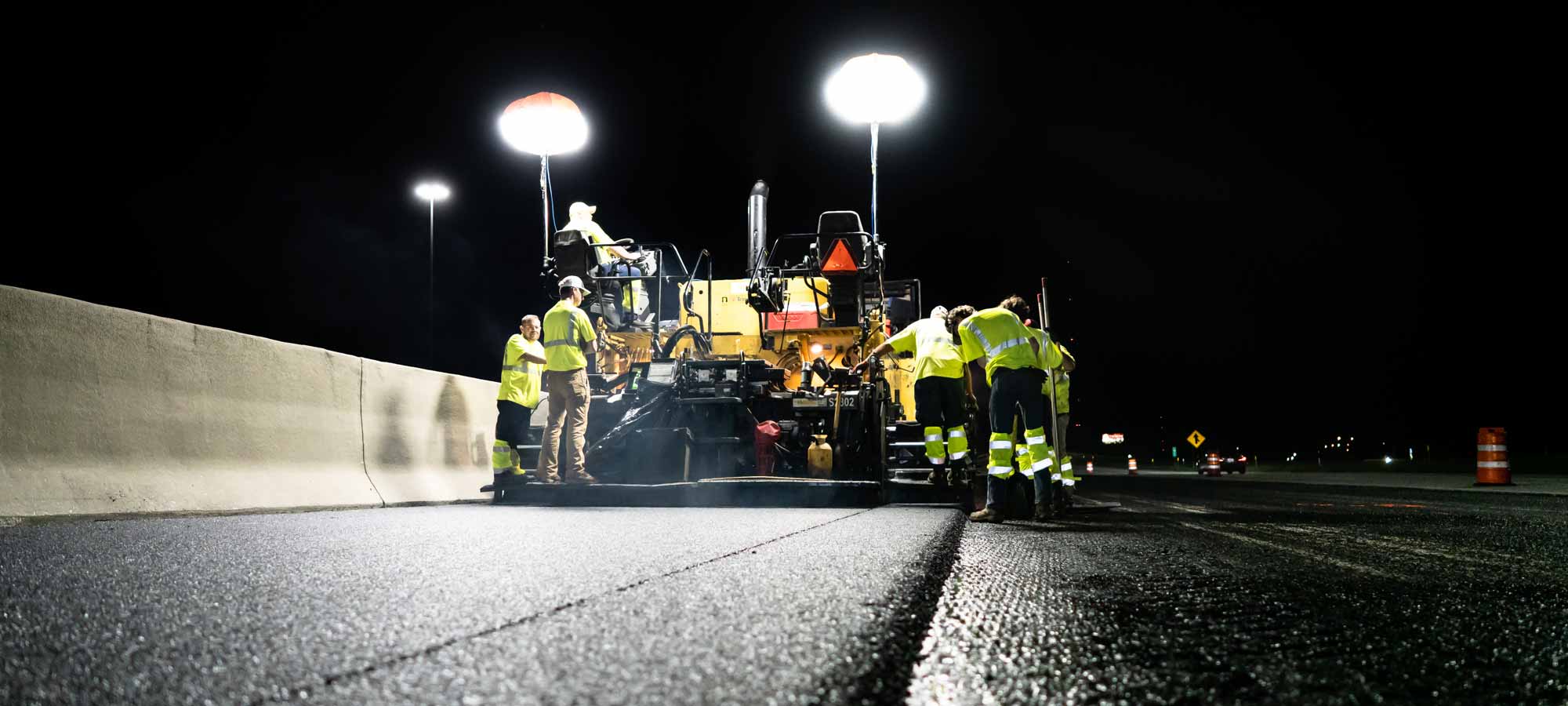
Typical production sequence
Scotty’s crews plan this sequence in 3D, then execute with GPS-enabled equipment, GPS-tracked hauling, and intelligent compaction to guarantee quality at every stage.
How long will an asphalt overlay last?
In Kentucky, a properly designed and compacted overlay can last 8 to 15 years on light to moderate traffic, often longer with crack sealing and timely sealcoat on lots. On heavy truck routes, expect 7 to 12 years depending on mix design, thickness, and drainage. Maintenance and traffic control during curing affect outcomes, and density is the biggest predictor of life.
How long does it take for asphalt overlay to dry?
You can typically drive light passenger vehicles on an overlay within 24 to 48 hours in mild Kentucky weather. Heavy trucks and tight turning should wait 2 to 3 days. In spring and fall, cool, dry days help compaction and set time. In summer heat, surface oils can stay tacky longer, so striping and tight turns may be delayed. Full curing for stiffness continues over weeks, which is why early compaction and temperature control are crucial.
Can you put new asphalt over old asphalt?
Yes, if the existing pavement is sound and clean. You must correct drainage, level depressions, and bond layers with tack. If the old surface is rutted or brittle, mill first. Overlays on unstable or saturated bases fail early, so address soft spots before placement.
When should an asphalt driveway or lot be replaced?
Choose replacement when more than 25 to 30 percent of the area has fatigue cracking or base failures, when drainage cannot be corrected with milling, or when multiple thin overlays have raised elevations above thresholds or curb reveal. Replacement also makes sense when frost heave or clay subgrade movement causes recurring settlement and patching does not hold.
Budgeting ranges you can use for planning
Without promising pricing, you can budget by thinking in tiers.
Your actual costs depend on access, traffic control, mix type, night work, drainage fixes, and haul distances. A site assessment with cores provides the most accurate plan.
Kentucky timelines and weather windows
Why Scotty’s for resurfacing and overlays
Scotty’s Contracting & Stone is Kentucky based, employee owned, and vertically integrated. We quarry, haul, engineer, and pave in one operation to guarantee schedule and quality. Our teams use 3D digital blueprints, GPS-enabled pavers and rollers, GPS-tracked hauling, and intelligent compaction. That toolset, paired with 700 professionals, delivers consistent density and smoothness. If you need mill and overlay services in Bowling Green this season, our crews are ready.
For deeper technology insight, explore our 3d machine control services bowling green article. If you are scheduling a corridor or commercial site in Warren County, our roadway engineering service bowling green page outlines how we plan and execute resurfacing programs. For direct support on materials or to request a site visit, connect with our team through our contact page and mention if you need coordination with a rock quarry bowling green KY supplier for aggregate questions.
How to request a site assessment
Summary
Overlay is worth it when the structure is sound, drainage works, and you want the best life per dollar. Mill and overlay is the workhorse solution that resets profile and ride while bonding new asphalt to old. Replacement is the right move when failures and poor subgrade make quick fixes short lived. Plan your path with a site assessment, clear production sequencing, and a timeline that respects Kentucky weather. Scotty’s integrates engineering, materials, hauling, and paving to guarantee quality at every stage, so your pavement performs from day one and for years to come.